
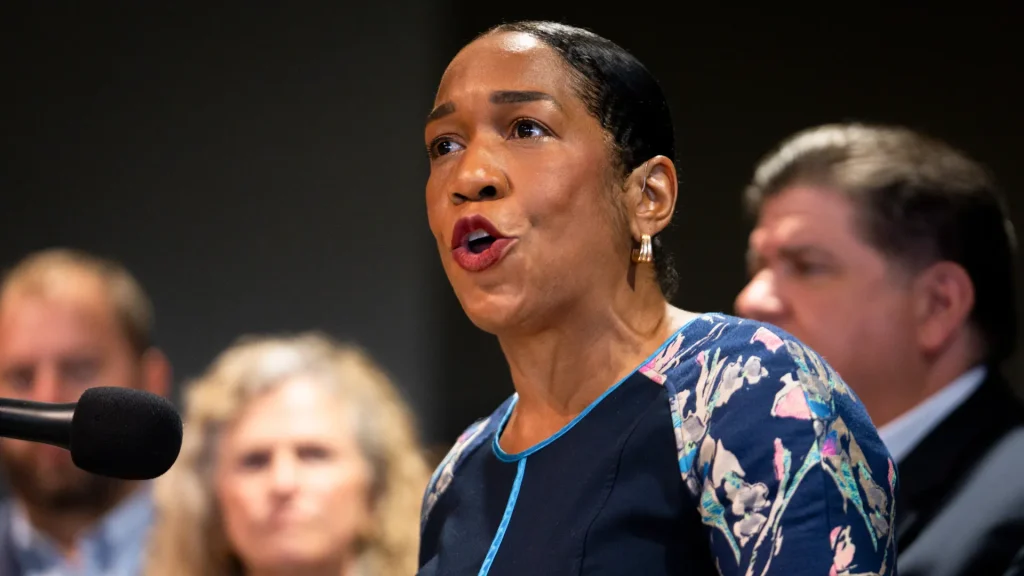
Juliana Stratton’s election to the U.S. Senate will add a new chapter to the history of Black women in American politics. The Illinois Democrat defeated Republican Don Tracy on Tuesday, November 3, winning the seat held by retiring Senator Dick Durbin. When Stratton takes office in January, she will become the second Black woman to represent Illinois in the Senate and the sixth Black woman to serve in the chamber.
Her arrival will also create a first: for the first time in the Senate’s history, three Black women will serve at the same time. Stratton will join Senators Lisa Blunt Rochester of Delaware and Angela Alsobrooks of Maryland, who began serving in 2025. Their simultaneous service will follow a long period in which no more than two Black women had ever served in the Senate concurrently.
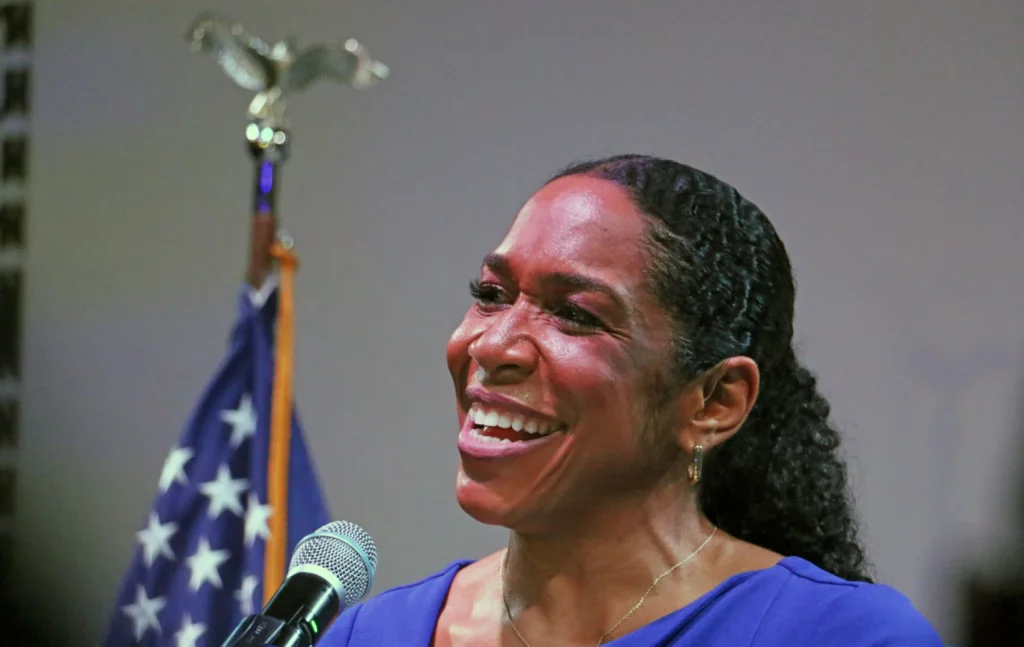
The milestone reaches back to Carol Moseley Braun, who won election in Illinois in 1992 and became the first Black woman elected to the Senate. She served from 1993 to 1999. More than three decades later, Stratton’s victory brings another Black woman from Illinois to the chamber—and marks a moment when three Black women will have seats there together.
Stratton’s election has significance for Illinois as well. She and Senator Tammy Duckworth, who is Asian American, will make Illinois the first state represented by two women of color in the Senate at the same time, according to Axios. The state has already sent several notable Black lawmakers to the chamber, including former President Barack Obama and Roland Burris, who was appointed to the Senate in 2009.
For Stratton, the victory caps a career in public service that began in Chicago. Born and raised on the city’s South Side, she studied at the University of Illinois Urbana-Champaign and earned a law degree from DePaul University. Before running for office, she worked as a mediator and arbitrator, led organizations focused on public safety and justice, and served on the Kenwood Academy Local School Council. She later represented the 5th District in the Illinois House.
RELATED: The Most Scandalous Outfits Ever Worn By First Ladies
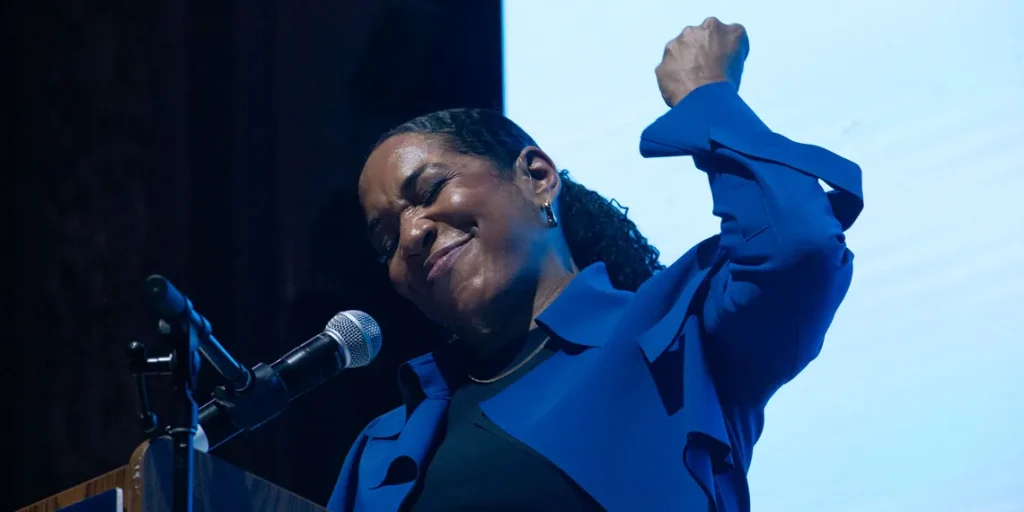
In 2018, Stratton was elected lieutenant governor as Governor JB Pritzker’s running mate. She was reelected in 2022. In that role, she led state initiatives and councils focused on justice, equity, opportunity, women and girls, and rural affairs. The Illinois governor’s office describes her work as centered on finding solutions with communities affected by the issues at hand.
The Senate campaign was competitive. Stratton won a crowded Democratic primary that included U.S. Representatives Robin Kelly and Raja Krishnamoorthi, then faced Tracy, a former chair of the Illinois Republican Party, in the general election. Governor Pritzker endorsed her in the primary. The Associated Press called the general election for Stratton on election night.
Her campaign emphasized health care, affordability and opposition to President Donald Trump’s policies. Stratton supports Medicare for All and has called for raising the federal minimum wage to $25 an hour. She has also proposed a middle-class tax cut funded by higher taxes on people earning more than $1 million annually. Those are campaign positions; turning them into law would require congressional support and passage through the legislative process.
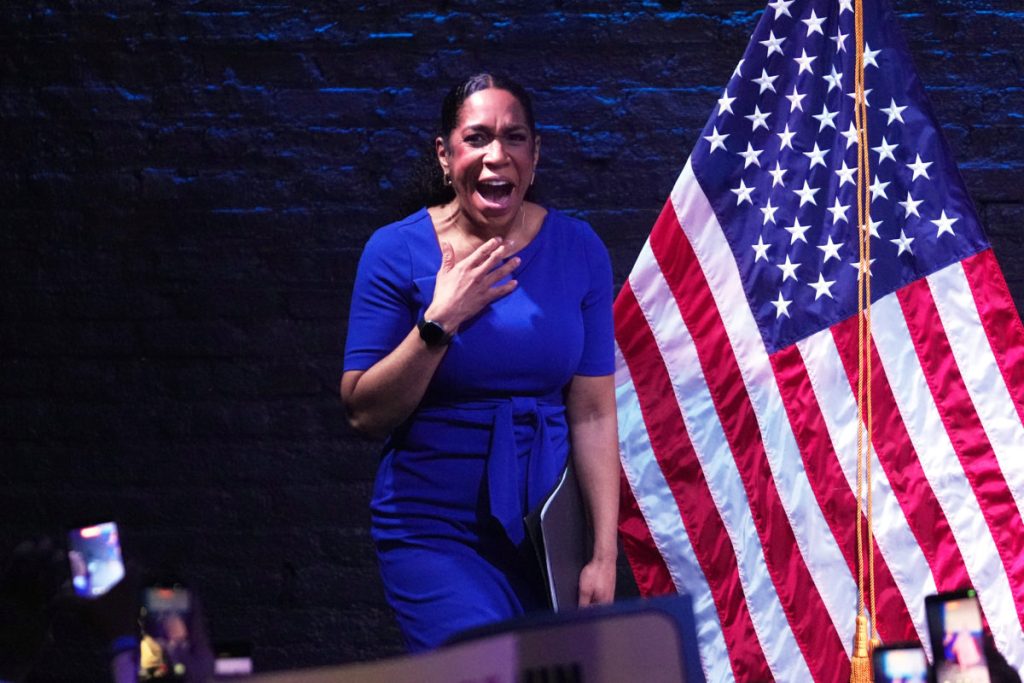
At her election-night gathering, Stratton told supporters that the campaign had been about “every day that comes after” Election Day, according to NPR Illinois. The remark pointed toward the work ahead: representing Illinois in a closely watched chamber where her priorities will be tested alongside those of her colleagues and the Senate’s political realities.
The historic nature of Stratton’s election does not, by itself, determine what she will accomplish in office. But her arrival changes who is present in the Senate and expands a group whose members have been rare in its history. Her election joins the milestones of Moseley Braun, Blunt Rochester and Alsobrooks, while making Illinois the setting for two distinct firsts: a Black woman returning to the state’s Senate delegation and three Black women serving in the chamber together.
RELATED: Politicians Who Look Completely Different: Is Plastic Surgery To Blame?